Home/Exhibits/Frontier Technology/Crystal structure defects

Crystal structure defects

Crystal structural defects refer to areas where the integrity of the internal structure of a crystal is compromised.

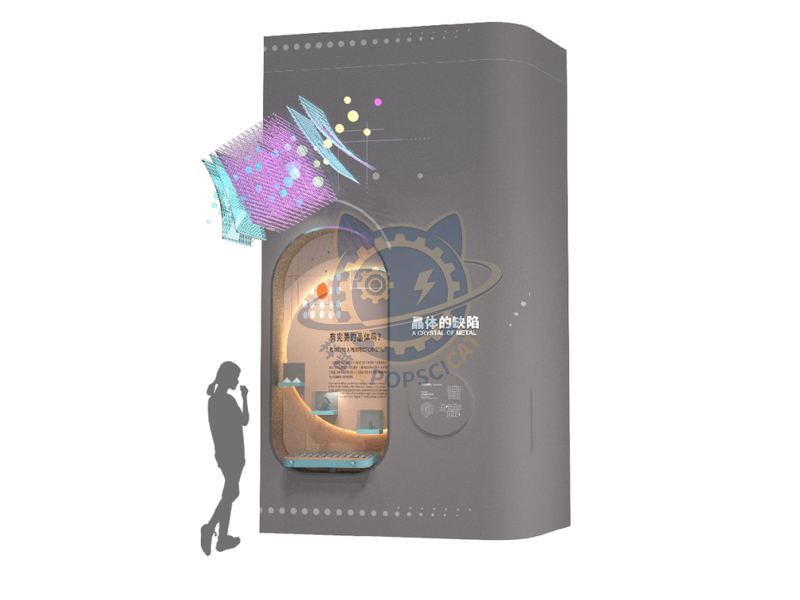
Crystal structure defects — Frontier Technology exhibit for science museums
Studio rendering
CategoryFrontier Technology
Standard sizeCustom size
SupplySingle unit or batch · OEM to your drawing
Lead timeStandard 4–8 weeks after deposit (confirmed per contract)
Warranty1 year, structure and control
DocumentsSpecification sheet · control diagram · spare-part list

A standard catalogue model: the dimensions, control package and finish are fixed, which is what keeps the price and the lead time predictable. Size, colour and interface language can be adapted without a new design cycle.

Ask about this model → Email us

Standard models from this range are also listed in our online store, priced in USD — see the price yourself ↗
01 / Overview

Crystal structural defects refer to areas where the integrity of the internal structure of a crystal is compromised. According to spatial form, it can be divided into four categories: point defects, line defects, surface defects, and volume defects. These types of defects are mainly caused by changes in external conditions during crystal growth, internal stresses after formation, and thermal motion. By precisely introducing and controlling various defects, the strength, plasticity, conductivity, magnetic and optical properties of materials can be fundamentally regulated, and new functional materials that meet future needs can be developed.

02 / How visitors use it

The unit is designed for unsupervised public use: controls are recessed or shielded, moving parts are enclosed, and the interface is operable by a child of about six with no instruction. Where a screen is used, the language can be switched without changing the hardware, and the content can be replaced on site.

03 / The science behind it

Crystal structural defects refer to irregular or incomplete regions that appear in the perfect periodic arrangement of an ideal crystal. These defects have a significant impact on the properties of materials, including their growth, diffusion, phase transformation, strength, deformation, and fracture. Crystal defects can be classified into point defects, line defects, and surface defects based on their distribution and properties in the lattice. one Point defect: This is the simplest crystal defect, including vacancies and self interstitial atoms. Vacancies refer to the missing positions of atoms that should exist in the lattice, while self interstitial atoms are atoms squeezed into the interstitial positions of the lattice. In metals, vacancies are usually more common than self interstitial atoms because self interstitial atoms require more space, while gaps in metal lattices are relatively smaller. The presence of point defects increases the entropy of the crystal, i.e. the disorder of the system, and as the temperature increases, the number of vacancies increases exponentially.

04 / Built for a public floor

Every unit leaves the factory after a running test: mechanisms cycled, electronics burned in, edges dressed, fixings torqued and marked. Wear parts — bearings, sliders, lamps, belts, touch panels — are modular and listed on the spare-part sheet, so a venue technician can replace them without returning the exhibit. Crating is plywood with foam blocking; the loading plan and packing list travel with the shipment.

Same category

More in Frontier Technology

Other models from the Frontier Technology line, all held to the same specification and the same control package.

Start a project

Send us your exhibit list.
We will come back with a price.

Attach a theme outline, a floor plan, or nothing at all — a photo of the space is enough to start. Quotations are issued against a real exhibit list, not per-square-metre guesses.

WeChat QR code — scan to message us Scan to add us
on WeChat