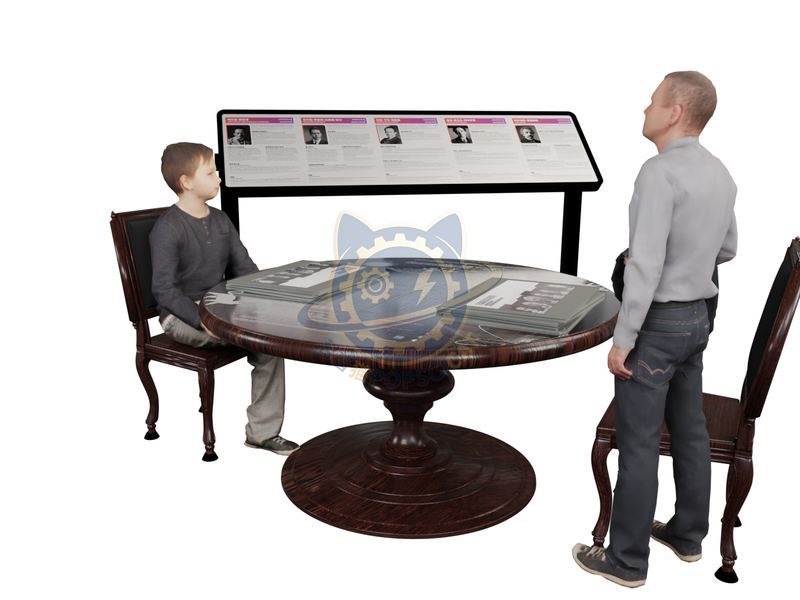
The exhibit consists of two 21.5-inch touchscreen all-in-one machines and customized tables and chairs.
| Category | Frontier Technology |
|---|---|
| Standard size | Custom size |
| Supply | Single unit or batch · OEM to your drawing |
| Lead time | Standard 4–8 weeks after deposit (confirmed per contract) |
| Warranty | 1 year, structure and control |
| Documents | Specification sheet · control diagram · spare-part list |
A standard catalogue model: the dimensions, control package and finish are fixed, which is what keeps the price and the lead time predictable. Size, colour and interface language can be adapted without a new design cycle.
Standard models from this range are also listed in our online store, priced in USD — see the price yourself ↗
The exhibit consists of two 21.5-inch touchscreen all-in-one machines and customized tables and chairs. The exhibit can provide interactive experience for two viewers at the same time. In unmanned interactive mode, the touchscreen standby interface displays scientists participating in the quantum century debate. visitors sits in the corresponding seat and clicks on the touch screen to join the meeting and read the key information and problem explanations. They choose any school of thought to answer questions, allowing visitors to understand the characteristics and differences of the two schools of thought through interactive answering. This guides visitors to think about "how do we understand and recognize the world?" We can only grasp the world from phenomena, or can we understand the laws behind the operation of the world and feel the disruptive power of quantum theory.
The unit is designed for unsupervised public use: controls are recessed or shielded, moving parts are enclosed, and the interface is operable by a child of about six with no instruction. Where a screen is used, the language can be switched without changing the hardware, and the content can be replaced on site.
The establishment of quantum mechanics in the early 20th century sparked an exceptionally intense and prolonged debate in the physics community. The participants in this debate mainly include the Copenhagen faction centered around Niels Bohr, as well as opponents of the Copenhagen faction, mainly Albert Einstein, Louis de Broglie, and Schr ö dinger. The content of the debate involves fundamental issues such as the physical landscape, fundamental principles, completeness, and even philosophical foundations and worldviews of quantum mechanics. According to the content and time of the debate, this great debate can be divided into four stages: The first stage, in 1926, Schr ö dinger was invited by Bohr to give a speech on "The Foundations of Wave Mechanics" in Copenhagen, which led to the outbreak of the first debate. In the second stage, the Fifth Solvay Conference was held in October 1927, with the theme of "Electrons and Photons". The second debate on the meaning of the new quantum theory was held at the conference. The third stage, 19.
Every unit leaves the factory after a running test: mechanisms cycled, electronics burned in, edges dressed, fixings torqued and marked. Wear parts — bearings, sliders, lamps, belts, touch panels — are modular and listed on the spare-part sheet, so a venue technician can replace them without returning the exhibit. Crating is plywood with foam blocking; the loading plan and packing list travel with the shipment.
Other models from the Frontier Technology line, all held to the same specification and the same control package.

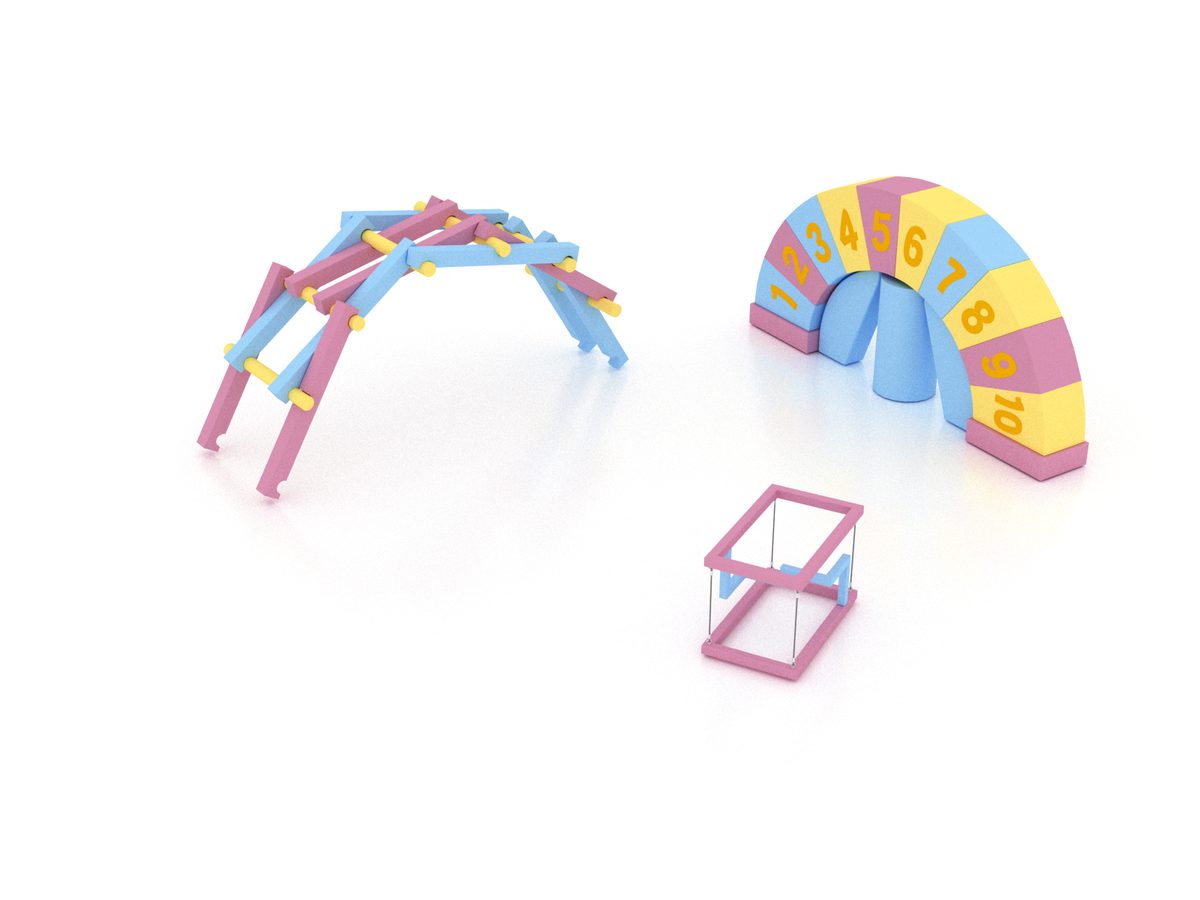
Build a span from interchangeable parts and load it until it fails.

Shape-memory alloy, aerogel and carbon fibre under the visitor's hand.

Build a lattice from magnetic balls and see why a crystal cleaves.

Four arms perform a synchronised routine behind a glass wall.
Attach a theme outline, a floor plan, or nothing at all — a photo of the space is enough to start. Quotations are issued against a real exhibit list, not per-square-metre guesses.
Scan to add us