Home/Exhibits/Life Science & Health/Chemical drug research and development

Chemical drug research and development

The first step in drug development is to identify biological targets associated with specific diseases, typically…

Chemical drug research and development — Life Science & Health exhibit for science museums
Studio rendering
CategoryLife Science & Health
Standard sizeCustom size
SupplySingle unit or batch · OEM to your drawing
Lead timeStandard 4–8 weeks after deposit (confirmed per contract)
Warranty1 year, structure and control
DocumentsSpecification sheet · control diagram · spare-part list

A standard catalogue model: the dimensions, control package and finish are fixed, which is what keeps the price and the lead time predictable. Size, colour and interface language can be adapted without a new design cycle.

Ask about this model → Email us

Standard models from this range are also listed in our online store, priced in USD — see the price yourself ↗

01 / Overview

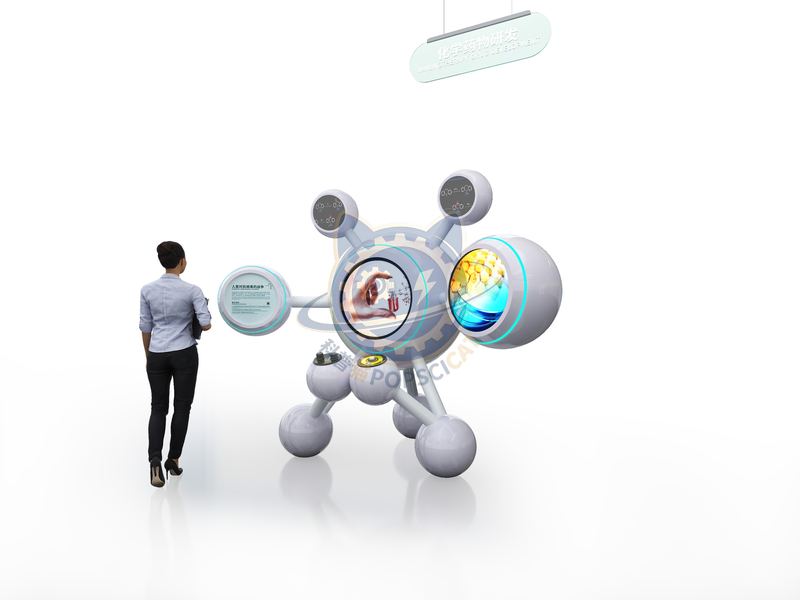
The first step in drug development is to identify biological targets associated with specific diseases, typically proteins. The identification and validation of targets are the foundation for ensuring successful research and development. Scientists will synthesize preliminary drug molecules and optimize their structure through multiple rounds of testing to enhance their binding ability to targets. The modification of molecular structure can alter the intermolecular interactions, thereby affecting the physicochemical properties of drugs, such as their binding ability to targets, solubility, and stability. Finally, the drug needs to undergo in vitro efficacy experiments and large-scale randomized double-blind trials to evaluate its effectiveness and safety, which are crucial for the clinical application of the drug.

02 / How visitors use it

The unit is designed for unsupervised public use: controls are recessed or shielded, moving parts are enclosed, and the interface is operable by a child of about six with no instruction. Where a screen is used, the language can be switched without changing the hardware, and the content can be replaced on site.

03 / The science behind it

The research and development process of chemical drugs involves 1) searching for disease mechanisms and discovering targets, and 2) searching for lead compounds. Lead compounds, also known as lead compounds, refer to compounds synthesized using various methods with certain biological activity and chemical structures, which are used for further structural modification and modification. 3) Synthesis of lead compounds 4) Determination of lead compound structure 5) In vitro pharmacological experiments 6) Optimization of lead compounds Due to the inherent defects of lead compounds, such as low activity, unstable structure, high toxicity, poor selectivity, and unreasonable drug metabolic characteristics, chemical modification is necessary to achieve better results. In vivo experiments involve analyzing metabolites, drug formulations, drug analysis, clinical trials, new drug registration, application for mass production, and drug marketing.

04 / Built for a public floor

Every unit leaves the factory after a running test: mechanisms cycled, electronics burned in, edges dressed, fixings torqued and marked. Wear parts — bearings, sliders, lamps, belts, touch panels — are modular and listed on the spare-part sheet, so a venue technician can replace them without returning the exhibit. Crating is plywood with foam blocking; the loading plan and packing list travel with the shipment.

Same category

More in Life Science & Health

Other models from the Life Science & Health line, all held to the same specification and the same control package.

Start a project

Send us your exhibit list.
We will come back with a price.

Attach a theme outline, a floor plan, or nothing at all — a photo of the space is enough to start. Quotations are issued against a real exhibit list, not per-square-metre guesses.

WeChat QR code — scan to message us Scan to add us
on WeChat