
With the beginning of agricultural civilization, people bid farewell to the nomadic life of gathering and hunting,…
| Category | Signature & Outdoor |
|---|---|
| Standard size | Custom size |
| Supply | Single unit or batch · OEM to your drawing |
| Lead time | Standard 4–8 weeks after deposit (confirmed per contract) |
| Warranty | 1 year, structure and control |
| Documents | Specification sheet · control diagram · spare-part list |
A standard catalogue model: the dimensions, control package and finish are fixed, which is what keeps the price and the lead time predictable. Size, colour and interface language can be adapted without a new design cycle.
Standard models from this range are also listed in our online store, priced in USD — see the price yourself ↗
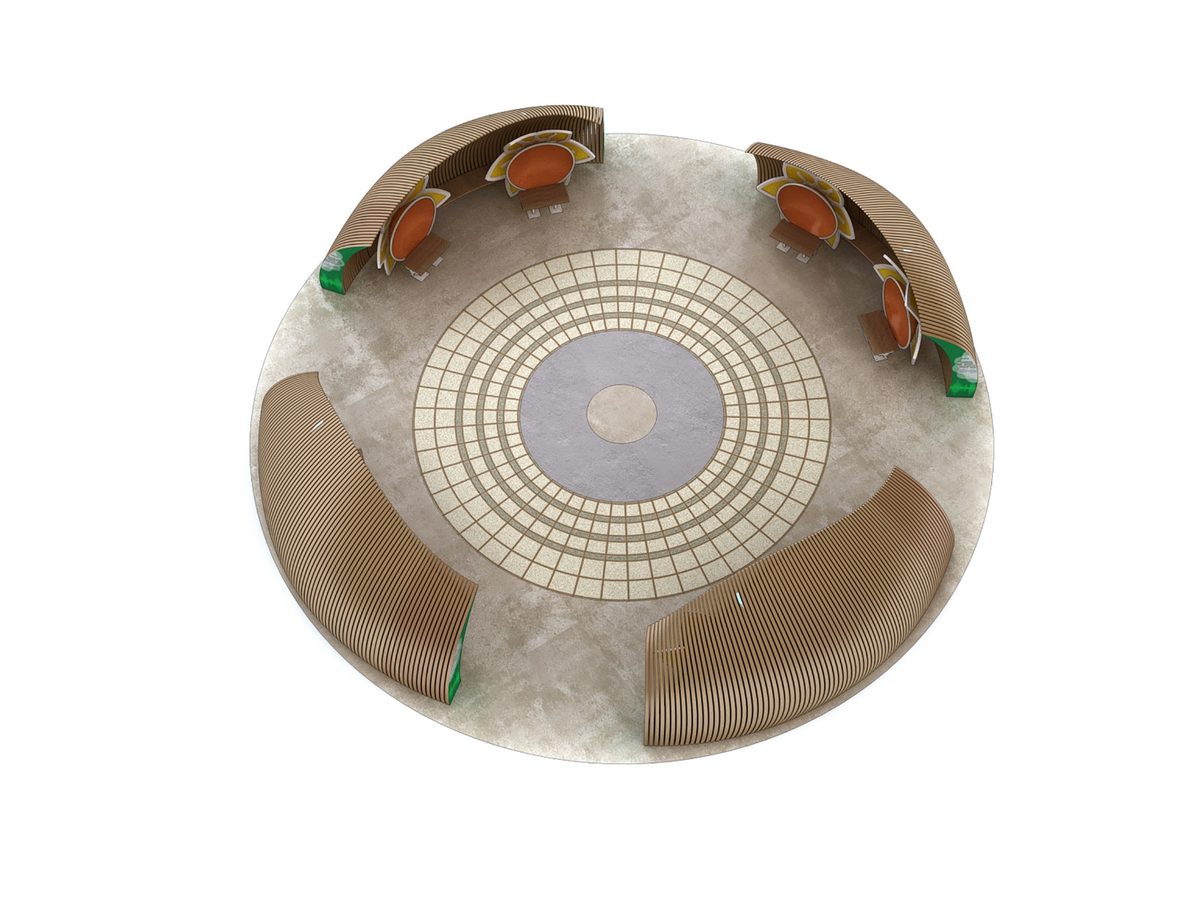
With the beginning of agricultural civilization, people bid farewell to the nomadic life of gathering and hunting, and began to settle down. Land became the core resource, and with the advancement of production tools and farming techniques, stable food supply brought about gradual population growth, laying the foundation for the development of social structure and culture. The ancients observed nature, recorded events through clay tablets, knots, oracle bone inscriptions, bamboo slips, and used human, animal, and hydraulic power to transform nature. They also learned to make pottery, bronze, and iron objects to meet the needs of daily life, production, worship, and war. The door to human civilization has officially opened.
The unit is designed for unsupervised public use: controls are recessed or shielded, moving parts are enclosed, and the interface is operable by a child of about six with no instruction. Where a screen is used, the language can be switched without changing the hardware, and the content can be replaced on site.
In the era of agricultural civilization, humans relied on land as the core, human labor and energy as the driving force, and the small-scale agricultural economy of men farming and women weaving as the main body. They lived self-sufficient, had a stable social structure, and made slow technological progress. During different periods of agricultural civilization, the changes in production tools and the landscape of life: The period of wooden and stone tools: humans shifted from hunting and gathering to settled agriculture, inventing simple agricultural tools such as stone tools and wooden plows, planting crops (such as wheat, barley, rice, etc.) and domesticating livestock, allowing humans to settle and form villages, promoting the complexity of social structure, represented by the Yellow River Basin, Mesopotamia, and Nile River Basin in China. Bronze Tool Period: With the emergence of metal processing technology, people began to use bronze to make agricultural tools, such as bronze shovels, bronze plows, etc. This period marked a major advancement in agricultural tools. During the Western Zhou Dynasty, villages were based on the well field system, dividing the land into nine parts, with the central part being public land and the remaining eight parts being private land.
Every unit leaves the factory after a running test: mechanisms cycled, electronics burned in, edges dressed, fixings torqued and marked. Wear parts — bearings, sliders, lamps, belts, touch panels — are modular and listed on the spare-part sheet, so a venue technician can replace them without returning the exhibit. Crating is plywood with foam blocking; the loading plan and packing list travel with the shipment.
Other models from the Signature & Outdoor line, all held to the same specification and the same control package.

Whisper at one focus and be heard clearly at the other.

A seven-metre movement wall showing four escapements at full scale.

Reads as scattered rods until seen from one marked point.

A walk-in sculpture of a surface with only one side.
Attach a theme outline, a floor plan, or nothing at all — a photo of the space is enough to start. Quotations are issued against a real exhibit list, not per-square-metre guesses.
Scan to add us