Home/Exhibits/Earth & Ecology/Changing Plate Structure

Changing Plate Structure

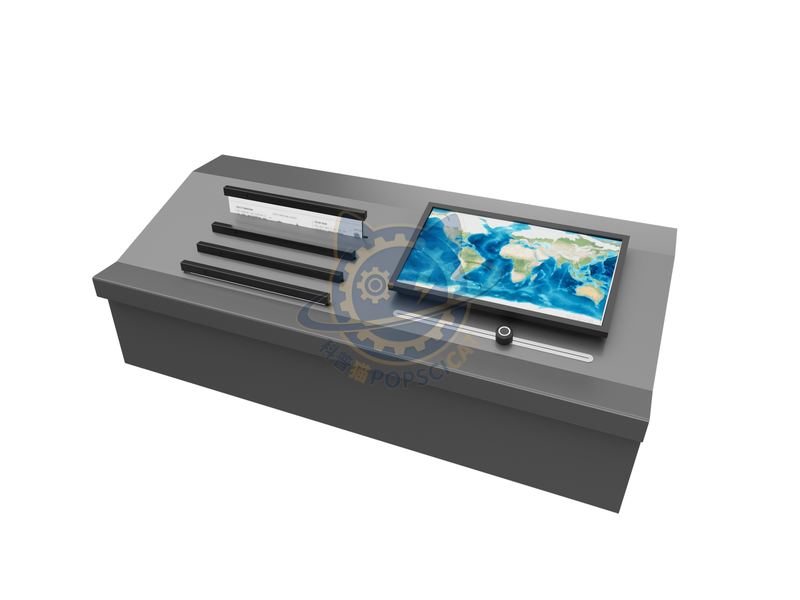
The Earth's crust is divided into several parts or plates, and their relative motion causes geological changes on…

Changing Plate Structure — Earth & Ecology exhibit for science museums
Studio rendering
CategoryEarth & Ecology
Standard sizeCustom size
SupplySingle unit or batch · OEM to your drawing
Lead timeStandard 4–8 weeks after deposit (confirmed per contract)
Warranty1 year, structure and control
DocumentsSpecification sheet · control diagram · spare-part list

A standard catalogue model: the dimensions, control package and finish are fixed, which is what keeps the price and the lead time predictable. Size, colour and interface language can be adapted without a new design cycle.

Ask about this model → Email us

Standard models from this range are also listed in our online store, priced in USD — see the price yourself ↗
01 / Overview

The Earth's crust is divided into several parts or plates, and their relative motion causes geological changes on the Earth's surface. This theory is called plate tectonics theory and is one of the core theories of modern geology. The main characteristics and processes of plate tectonics are that the Earth's plates drift at a rate of 1-10 cm per year on the Earth's surface, and this process is called plate drift. The relative movement between plates occurs at tectonic boundaries, which are the main areas of earthquake and volcanic activity, and may lead to crustal fractures and volcanic eruptions. Meanwhile, the relative motion and interaction of tectonic plates can also lead to changes in the terrain of the Earth's surface, such as the formation of mountains. The plates are mainly divided into continental plates and oceanic plates, which differ in composition and characteristics. It is worth noting that plates do not exist indefinitely, they may form in some areas and disappear or be swallowed up in others. The theory of plate tectonics provides a framework for explaining geological phenomena on the Earth's surface, which is crucial for understanding the Earth.

02 / How visitors use it

The unit is designed for unsupervised public use: controls are recessed or shielded, moving parts are enclosed, and the interface is operable by a child of about six with no instruction. Where a screen is used, the language can be switched without changing the hardware, and the content can be replaced on site.

03 / The science behind it

Throughout the billions of years of Earth's history, the continent has been constantly evolving. Different geological plates move slowly but firmly, breaking and merging, sometimes gathering and sometimes dispersing. However, every hundreds of millions of years, a supercontinent regularly emerges on Earth. British philosopher Bacon discovered the possibility of continental drift. In 1912, German meteorologist Alfred Wagner officially proposed the theory of continental drift. Wagner speculated that continents began drifting more than 200 million years ago. Before drifting, all continents became a single block, known as a pan continent. Due to various reasons, continents began to split, resulting in the formation of oceans between the separated oceans. Many continents are moving around and residing on different regions of the ocean, forming the current continental pattern. The Trilogy of Plate Theory Development: Plate Movement, Wilson Cycle, and Whole Mantle Circulation. The driving force of plate movement is generated by the heat inside the Earth.

04 / Built for a public floor

Every unit leaves the factory after a running test: mechanisms cycled, electronics burned in, edges dressed, fixings torqued and marked. Wear parts — bearings, sliders, lamps, belts, touch panels — are modular and listed on the spare-part sheet, so a venue technician can replace them without returning the exhibit. Crating is plywood with foam blocking; the loading plan and packing list travel with the shipment.

Same category

More in Earth & Ecology

Other models from the Earth & Ecology line, all held to the same specification and the same control package.

Start a project

Send us your exhibit list.
We will come back with a price.

Attach a theme outline, a floor plan, or nothing at all — a photo of the space is enough to start. Quotations are issued against a real exhibit list, not per-square-metre guesses.

WeChat QR code — scan to message us Scan to add us
on WeChat