Home/Exhibits/Earth & Ecology/Evolution of the Earth

Evolution of the Earth

A timeline globe that redraws the continents through four billion years.

Evolution of the Earth — Earth & Ecology exhibit for science museums
Studio rendering
CategoryEarth & Ecology
Standard sizeCustom size
SupplySingle unit or batch · OEM to your drawing
Lead timeStandard 4–8 weeks after deposit (confirmed per contract)
Warranty1 year, structure and control
DocumentsSpecification sheet · control diagram · spare-part list

A standard catalogue model: the dimensions, control package and finish are fixed, which is what keeps the price and the lead time predictable. Size, colour and interface language can be adapted without a new design cycle.

Ask about this model → Email us

Standard models from this range are also listed in our online store, priced in USD — see the price yourself ↗
01 / Overview

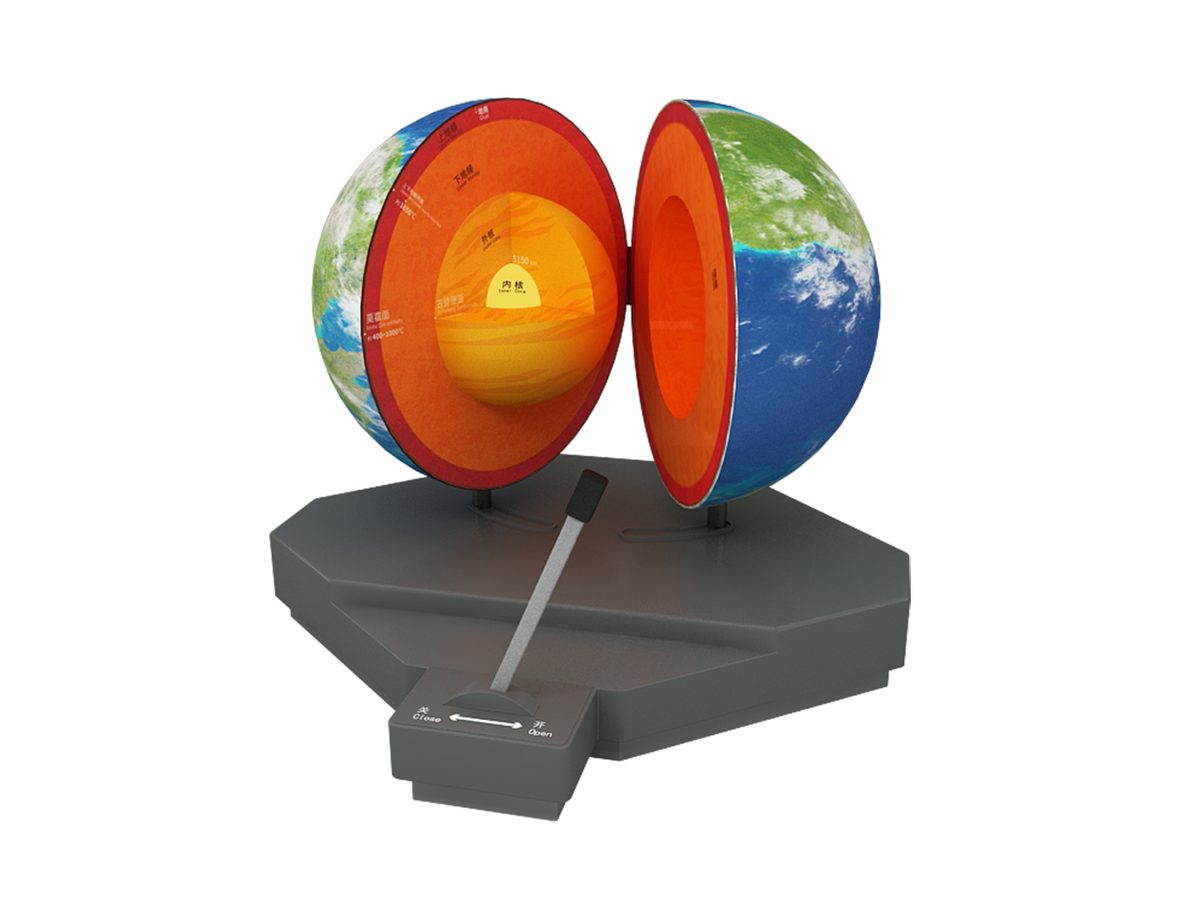
How the Earth gradually formed from the primordial solar nebula, including basic information such as its size, mass, orbit, etc. Display important geological events in Earth's history, such as plate tectonics, volcanic eruptions, glacial periods, etc. Watch movies about the evolution of the Earth and learn about its formation. The Earth was formed approximately 4.6 billion years ago by the condensation of primitive nebulae. In the early stages, it was a hot magma ball, which gradually cooled down and gave rise to primitive oceans and atmospheres. During the Dark Ages, geological activity was frequent and there were also numerous impacts from celestial bodies. In the Archean, primitive life forms such as blue-green algae emerged, releasing oxygen to alter atmospheric composition. In the Proterozoic era, eukaryotic and multicellular organisms developed. Since the Phanerozoic era, biological evolution has accelerated: in the Paleozoic era, marine invertebrates flourished and fish landed; Dinosaurs dominated the Mesozoic era, and birds and mammals first appeared; The extinction of the new generation of dinosaurs, the rise of mammals, the flourishing of angiosperms, and ultimately the emergence of humans led to the evolution of the Earth into the vibrant and ecologically diverse form it is today.

02 / How visitors use it

The unit is designed for unsupervised public use: controls are recessed or shielded, moving parts are enclosed, and the interface is operable by a child of about six with no instruction. Where a screen is used, the language can be switched without changing the hardware, and the content can be replaced on site.

03 / Built for a public floor

Every unit leaves the factory after a running test: mechanisms cycled, electronics burned in, edges dressed, fixings torqued and marked. Wear parts — bearings, sliders, lamps, belts, touch panels — are modular and listed on the spare-part sheet, so a venue technician can replace them without returning the exhibit. Crating is plywood with foam blocking; the loading plan and packing list travel with the shipment.

Same category

More in Earth & Ecology

Other models from the Earth & Ecology line, all held to the same specification and the same control package.

Start a project

Send us your exhibit list.
We will come back with a price.

Attach a theme outline, a floor plan, or nothing at all — a photo of the space is enough to start. Quotations are issued against a real exhibit list, not per-square-metre guesses.

WeChat QR code — scan to message us Scan to add us
on WeChat