In the early stages of the evolution of the solar system, the primitive dust clouds that formed planets began to…
| Category | Earth & Ecology |
|---|---|
| Standard size | Custom size |
| Supply | Single unit or batch · OEM to your drawing |
| Lead time | Standard 4–8 weeks after deposit (confirmed per contract) |
| Warranty | 1 year, structure and control |
| Documents | Specification sheet · control diagram · spare-part list |
A standard catalogue model: the dimensions, control package and finish are fixed, which is what keeps the price and the lead time predictable. Size, colour and interface language can be adapted without a new design cycle.
Standard models from this range are also listed in our online store, priced in USD — see the price yourself ↗
In the early stages of the evolution of the solar system, the primitive dust clouds that formed planets began to accumulate, forming a series of rings and some condensation centers. These large and small centers begin to attract surrounding material, forming asteroid like rock blocks that collide with each other. These rock blocks, due to being roughly on the same orbital plane and moving in similar directions, gradually underwent a change in the form of impact, forming a slightly larger accumulation center than the surrounding areas, and ultimately forming planets. Among these planets, there is a special existence, which is our home - Earth. The age of the Earth varies in nature, and certain elements such as uranium spontaneously decay into lead. The stability and known decay rate of this process provide scientists with a method for calculating the time of rock formation. Through the investigation of the geological age of the Earth, it has been found that the age of the Earth is at least 4 billion years or more. Understanding the age of the Earth is crucial for comprehending the history of the solar system, as it is not only.
The unit is designed for unsupervised public use: controls are recessed or shielded, moving parts are enclosed, and the interface is operable by a child of about six with no instruction. Where a screen is used, the language can be switched without changing the hardware, and the content can be replaced on site.
According to scientists' speculation, about 15 billion years ago, there was a Big Bang in the universe, and the fragments produced after the explosion formed large nebulae. Later, particles in the nebula attracted and gathered with each other, eventually forming the primitive Earth. After billions of years of vicissitudes, the Earth took on its current appearance. Various hypotheses about the birth of the Earth: nebular hypothesis, tidal hypothesis, and capture hypothesis. The age of the Earth: Scientists calculate the age of the Earth by calculating the age of rocks. As long as the mass of uranium and lead in the rock is calculated, the age of the rock can be determined. This is because uranium with a relative atomic mass of 238 decays into lead and helium, and it takes 4.5 billion years for each half of its mass to decay. Based on this, some people have measured and calculated the age of Earth's rocks to be over three to ten billion years. But the age of the Earth is not exactly equal to the age of the rocks. Before the formation of the Earth's crust, there was a period of melting, such as adding this period.
Every unit leaves the factory after a running test: mechanisms cycled, electronics burned in, edges dressed, fixings torqued and marked. Wear parts — bearings, sliders, lamps, belts, touch panels — are modular and listed on the spare-part sheet, so a venue technician can replace them without returning the exhibit. Crating is plywood with foam blocking; the loading plan and packing list travel with the shipment.
Other models from the Earth & Ecology line, all held to the same specification and the same control package.

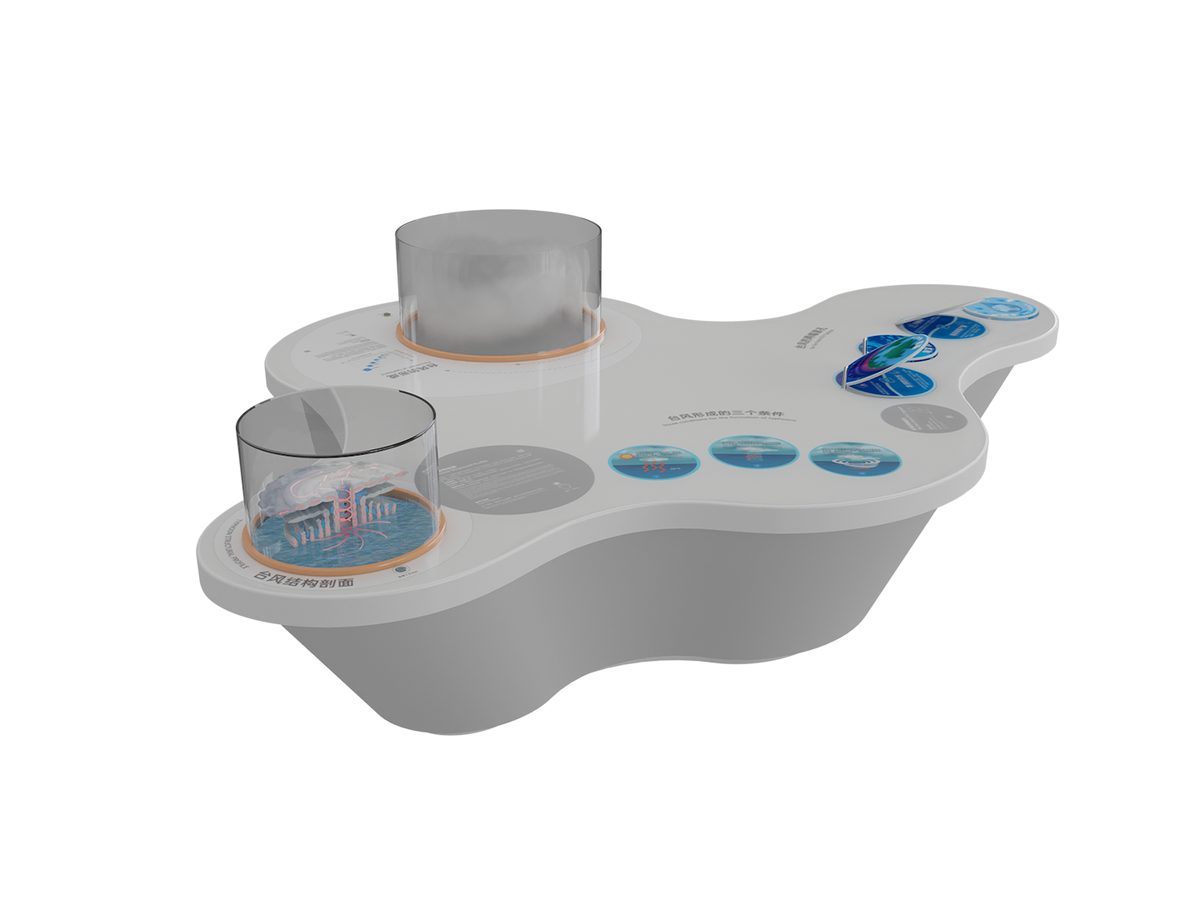
A vertical slice through a storm showing eye, eyewall and spiral bands.

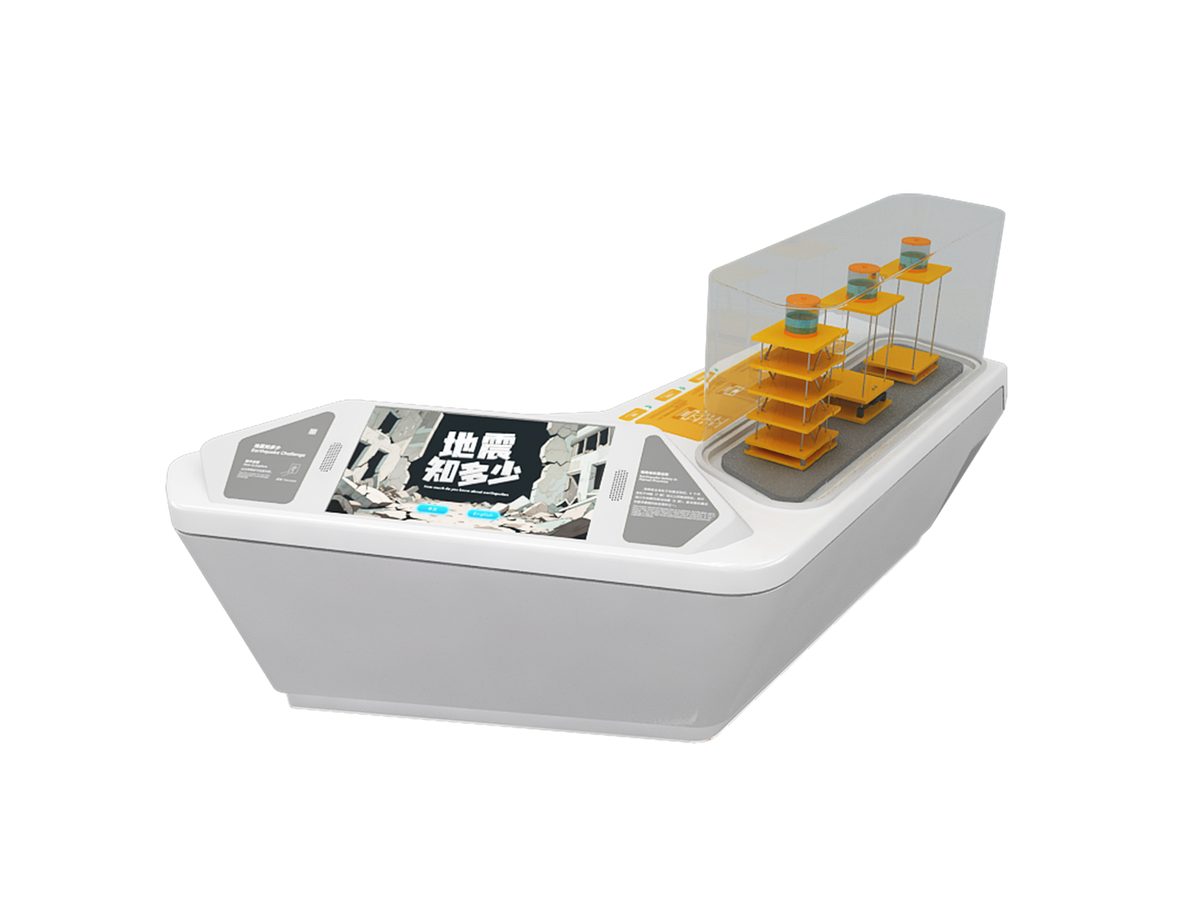
A platform shakes at recorded intensities while a seismograph traces the movement.

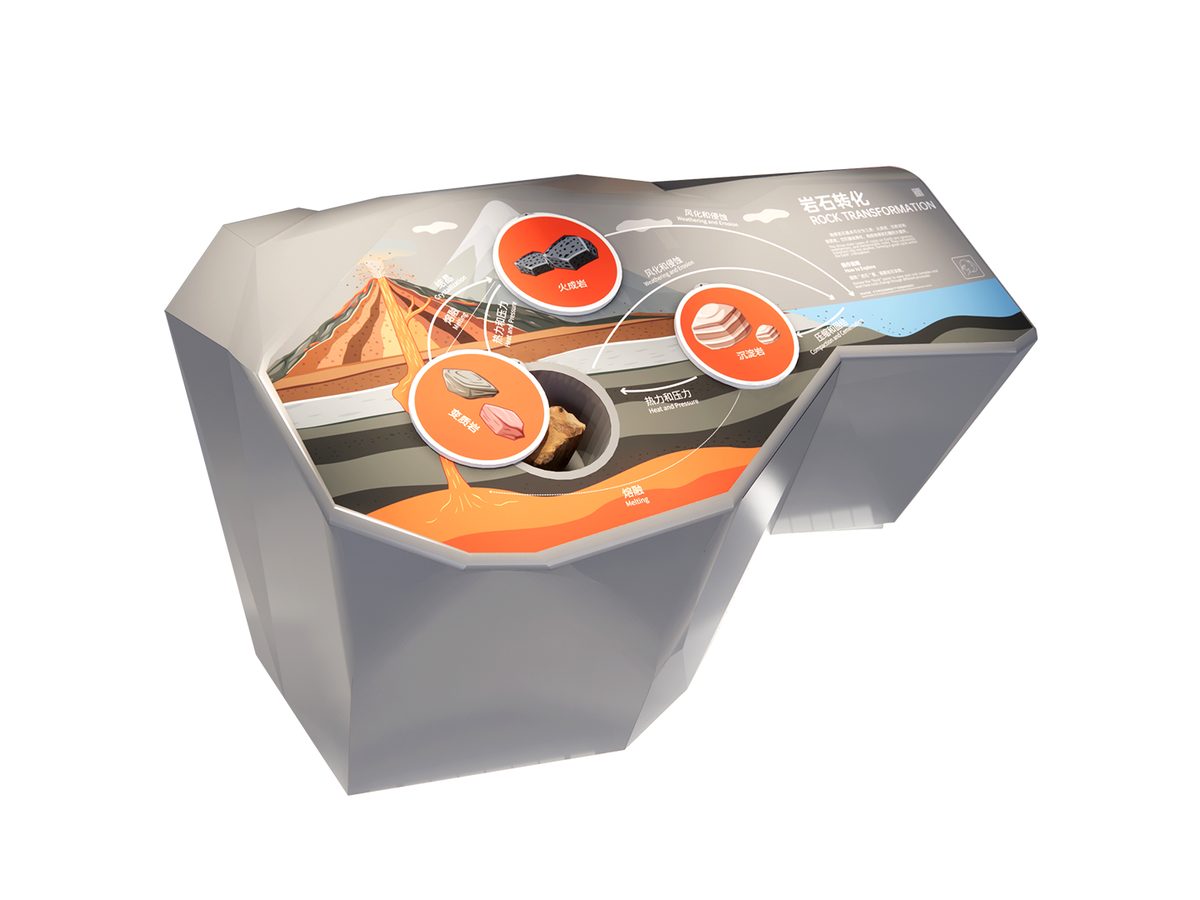
Heat and pressure turn one rock type into another on a turntable.

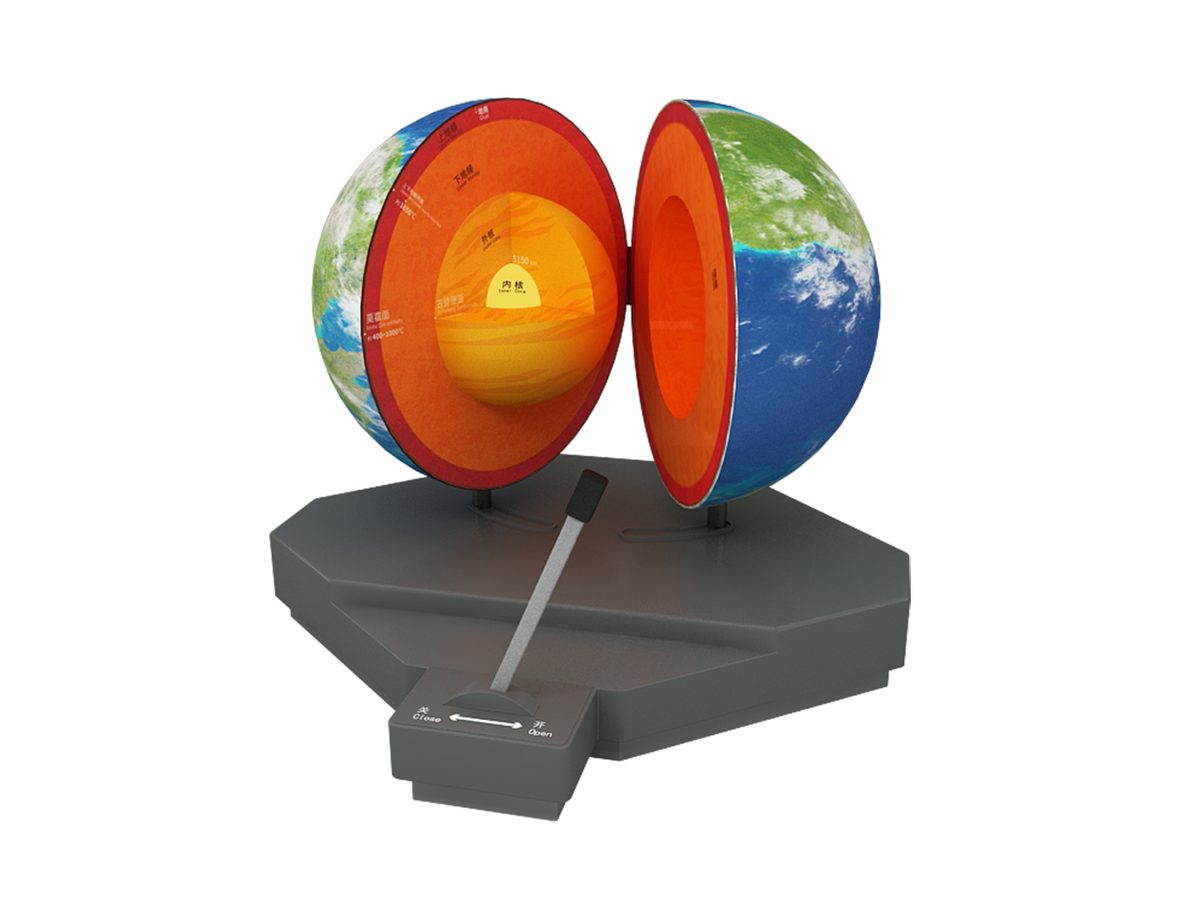
Cut-away globe showing crust, mantle, outer and inner core.
Attach a theme outline, a floor plan, or nothing at all — a photo of the space is enough to start. Quotations are issued against a real exhibit list, not per-square-metre guesses.
Scan to add us