The climate crisis caused by global warming is approaching, with rising sea levels threatening the homes of over 410…
| Category | Earth & Ecology |
|---|---|
| Standard size | Custom size |
| Supply | Single unit or batch · OEM to your drawing |
| Lead time | Standard 4–8 weeks after deposit (confirmed per contract) |
| Warranty | 1 year, structure and control |
| Documents | Specification sheet · control diagram · spare-part list |
A standard catalogue model: the dimensions, control package and finish are fixed, which is what keeps the price and the lead time predictable. Size, colour and interface language can be adapted without a new design cycle.
Standard models from this range are also listed in our online store, priced in USD — see the price yourself ↗
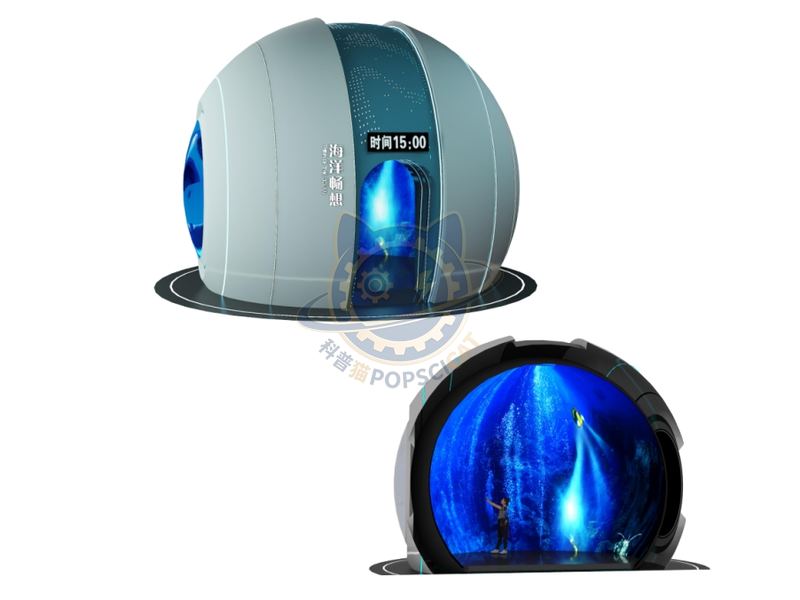
The climate crisis caused by global warming is approaching, with rising sea levels threatening the homes of over 410 million people. In those coastal cities, high-rise buildings and dense transportation facilities occupy most of the space, leading to extremely tight land resources. Faced with these challenges, Japanese architect Kiyotaka Kikuchi proposed an innovative solution in the mid-20th century - building a floating city on the sea. This future concept of living on the water surface may completely change our traditional understanding of living, working, and entertainment.
The unit is designed for unsupervised public use: controls are recessed or shielded, moving parts are enclosed, and the interface is operable by a child of about six with no instruction. Where a screen is used, the language can be switched without changing the hardware, and the content can be replaced on site.
With the development of technology, the progress of the times, and the improvement of quality of life, the population has also increased. At the same time, with the emergence of problems such as traffic congestion and housing shortages, people are beginning to consider whether it is possible to build cities underwater... This can not only solve various problems caused by the increase in population, but also enhance people's awareness of protecting nature and the environment. People call this type of city the "future city". At present, a Japanese architectural design company has successfully drawn the world's first underwater city blueprint. This crystal like 'palace' can be built as early as 2035. Urban design takes "environmental protection" as the fundamental starting point and fully utilizes underwater space as the ultimate goal. From a distance, reaching the seabed through the spiral shaped city, from a high altitude, the entrance to the "Blue Park" on the sea surface is incredibly huge, like a lion about to devour its prey. The diameter of the park is 500 meters long and exceeds four football fields. The funnel-shaped inner courtyard is embedded with a ball.
Every unit leaves the factory after a running test: mechanisms cycled, electronics burned in, edges dressed, fixings torqued and marked. Wear parts — bearings, sliders, lamps, belts, touch panels — are modular and listed on the spare-part sheet, so a venue technician can replace them without returning the exhibit. Crating is plywood with foam blocking; the loading plan and packing list travel with the shipment.
Other models from the Earth & Ecology line, all held to the same specification and the same control package.

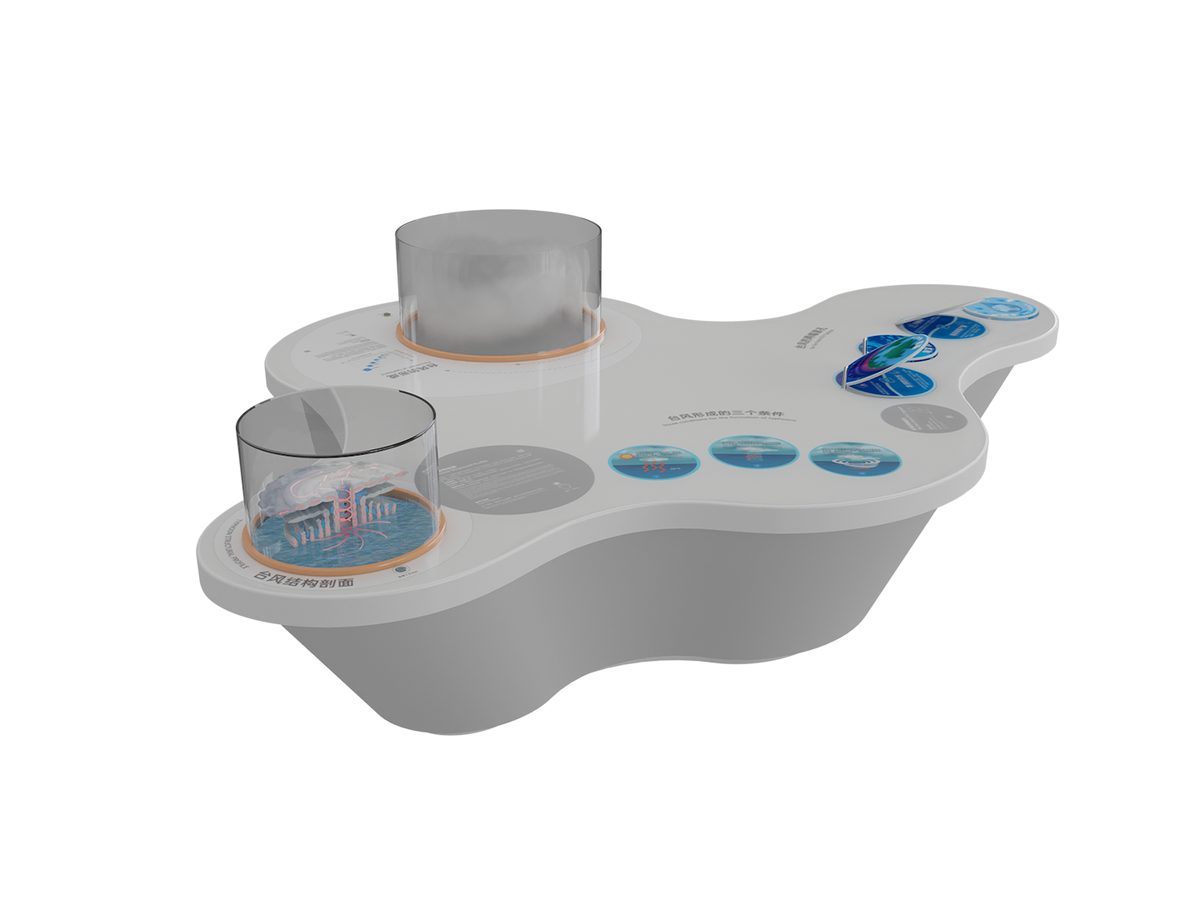
A vertical slice through a storm showing eye, eyewall and spiral bands.

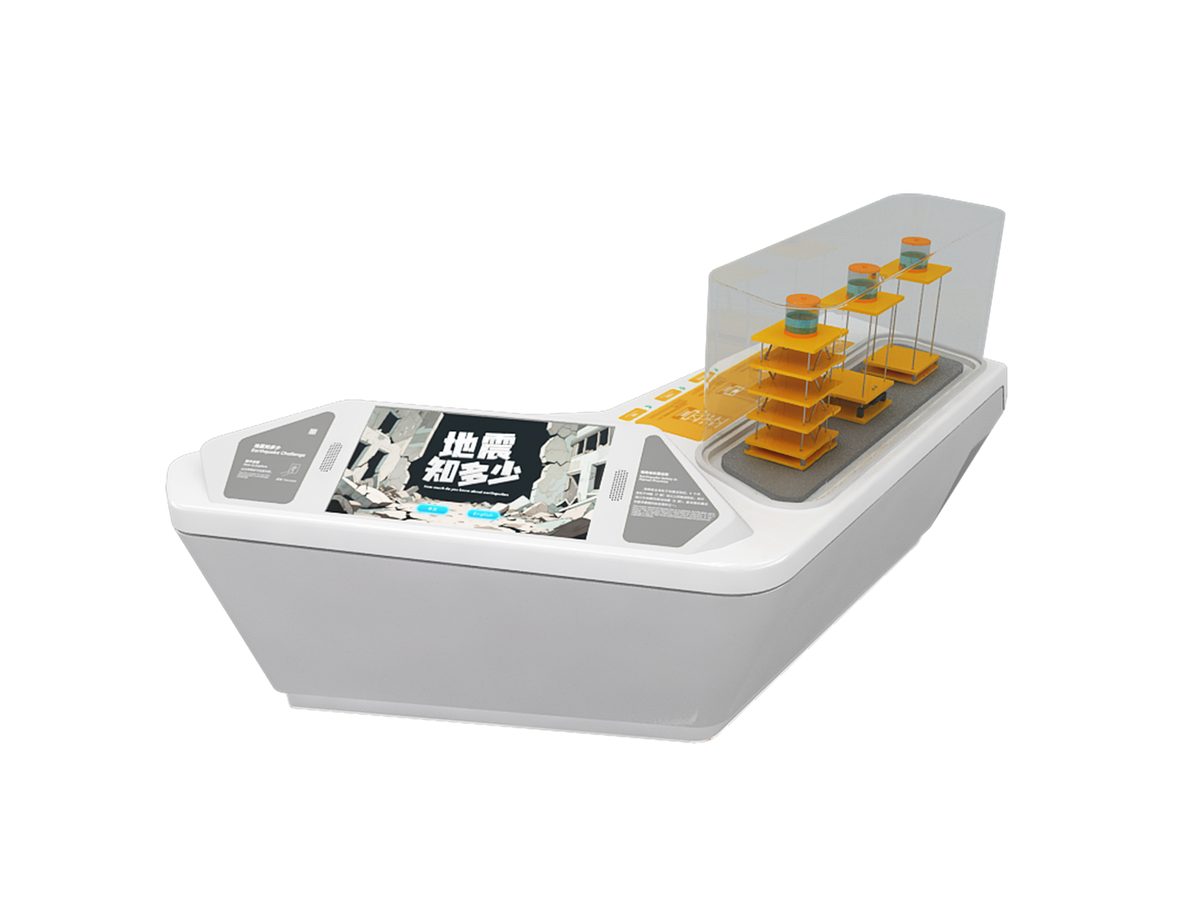
A platform shakes at recorded intensities while a seismograph traces the movement.

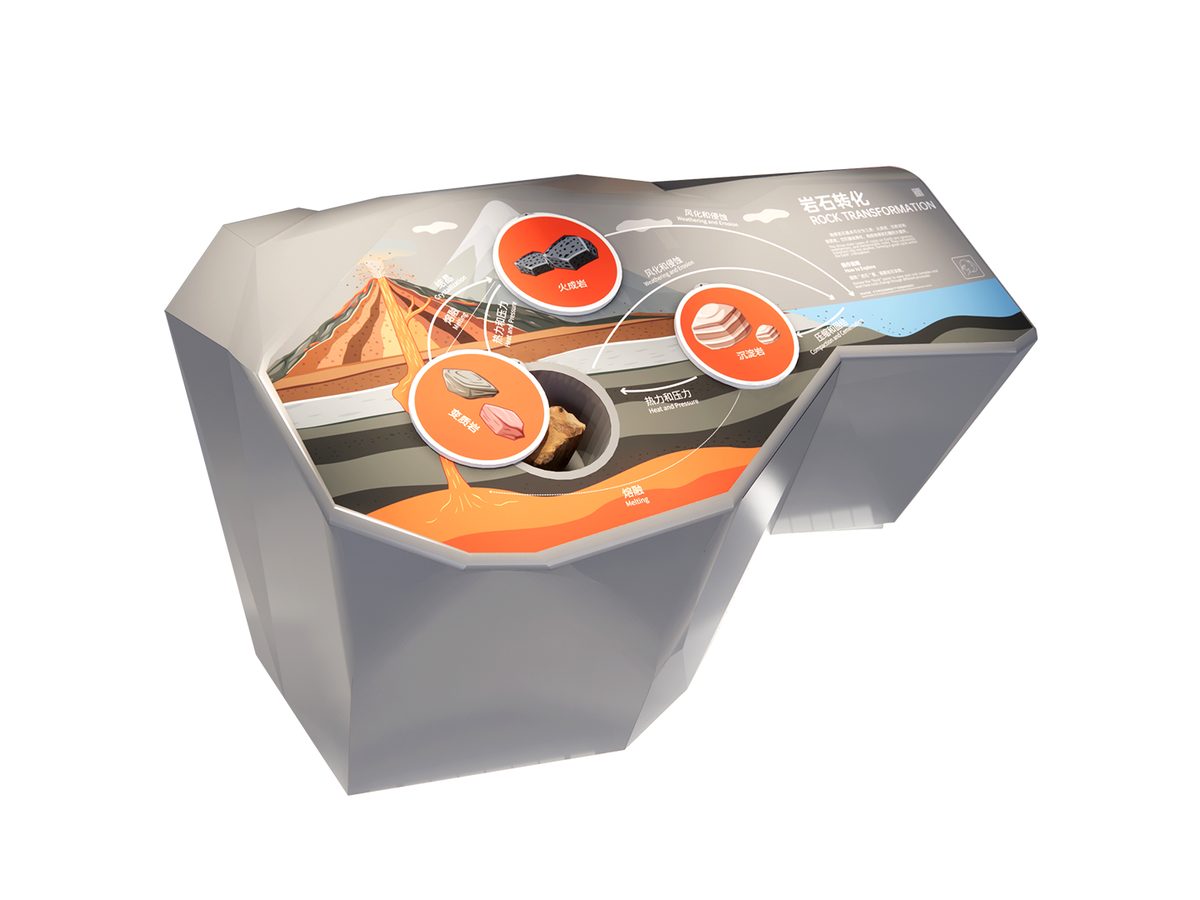
Heat and pressure turn one rock type into another on a turntable.

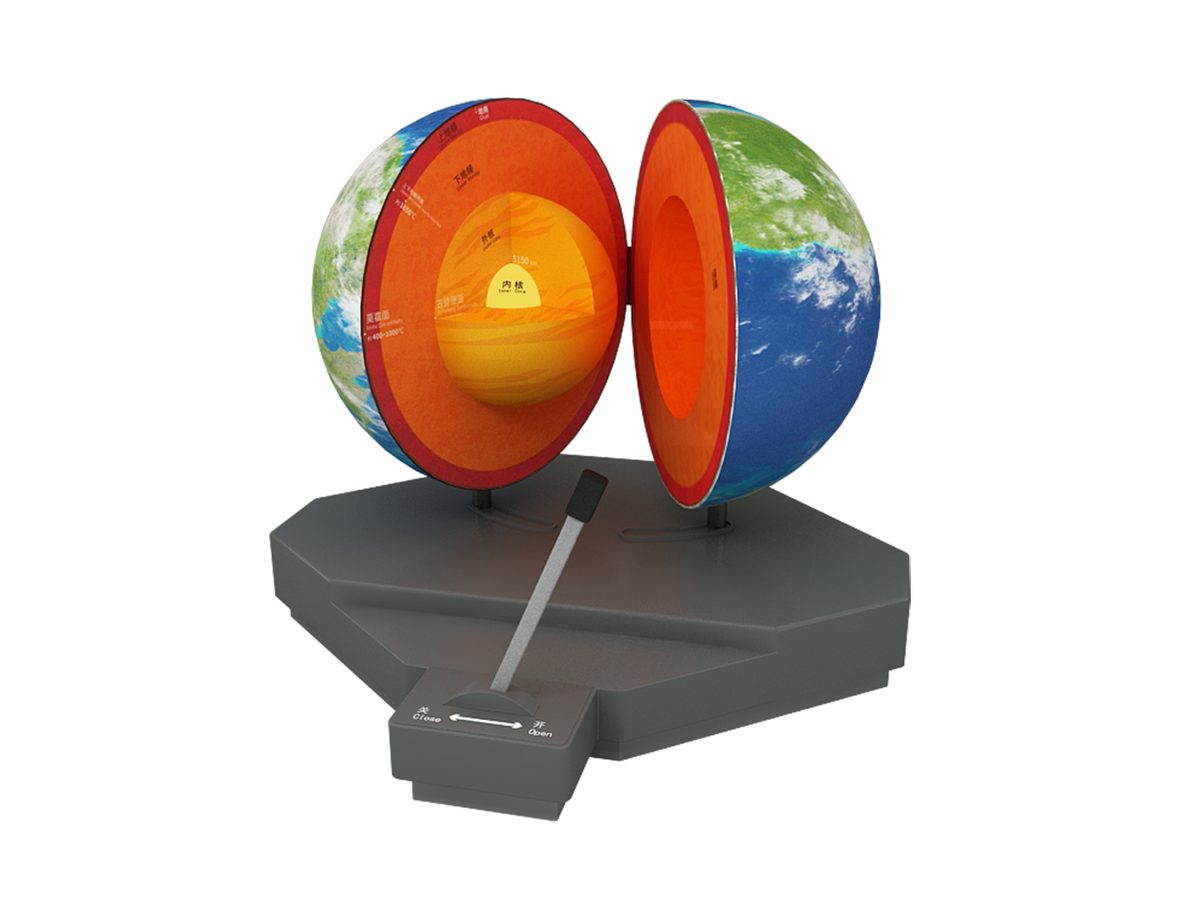
Cut-away globe showing crust, mantle, outer and inner core.
Attach a theme outline, a floor plan, or nothing at all — a photo of the space is enough to start. Quotations are issued against a real exhibit list, not per-square-metre guesses.
Scan to add us