Home/Exhibits/Basic Science/Exploring the Way of Statistics

Exploring the Way of Statistics

By simulating the verification process of gambler gambling, it is understood that when participating in dice rolling…

Exploring the Way of Statistics — Basic Science exhibit for science museums
Studio rendering
CategoryBasic Science
InteractionInteractive model
Standard sizeCustom size
SupplySingle unit or batch · OEM to your drawing
Lead timeStandard 4–8 weeks after deposit (confirmed per contract)
Warranty1 year, structure and control
DocumentsSpecification sheet · control diagram · spare-part list

A standard catalogue model: the dimensions, control package and finish are fixed, which is what keeps the price and the lead time predictable. Size, colour and interface language can be adapted without a new design cycle.

Ask about this model → Email us

Standard models from this range are also listed in our online store, priced in USD — see the price yourself ↗
01 / Overview

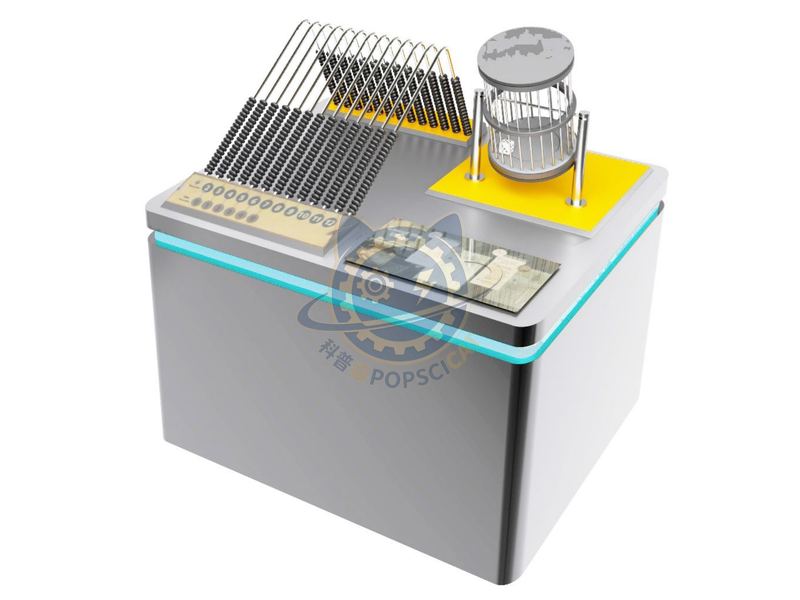
By simulating the verification process of gambler gambling, it is understood that when participating in dice rolling gambling, the banker can place bets in a predictable pattern. The exhibit consists of a rolling dice device and a rolling ball device. Interaction 1: Addition. Visitors push all the beads behind the metal strip, flip the dice device, and add the points on two dice. Then, slide one bead forward in the column corresponding to the total number, and repeat the process of rolling and rolling the dice. After rolling the dice multiple times, visitors will notice that the beads gather towards the center. This is because there are more ways to make two dice add up to a certain number. For example, there are six ways to add two dice together, but there is only one way to increase them to 2 or 12. Interaction 2: Subtraction. Visitors push all the beads behind the metal strip, flip the dice device, observe the number of points on each bead, and subtract the smaller number from the larger bead. Take the beads.

02 / How visitors use it

Interaction type: Interactive model. The unit is designed for unsupervised public use: controls are recessed or shielded, moving parts are enclosed, and the interface is operable by a child of about six with no instruction. Where a screen is used, the language can be switched without changing the hardware, and the content can be replaced on site.

03 / The science behind it

1. The Law of Gamblers Losing Out: An interesting theorem provided by probability theory: In "fair" gambling, any gambler with a limited gambling capital who continues to gamble for a long time will inevitably lose out one day. In a gamble, any gambler has the potential to win. Who loses and who wins is accidental. But as long as you keep gambling, losing all or the banker going bankrupt and running away is inevitable. 2. Dice probability problem: There are six ways to add two dice together, but there is only one way to increase them to 2 or 12. When subtracting two dice, there are ten ways to get 1, but only two methods get 5. Reference materials.

04 / Built for a public floor

Every unit leaves the factory after a running test: mechanisms cycled, electronics burned in, edges dressed, fixings torqued and marked. Wear parts — bearings, sliders, lamps, belts, touch panels — are modular and listed on the spare-part sheet, so a venue technician can replace them without returning the exhibit. Crating is plywood with foam blocking; the loading plan and packing list travel with the shipment.

Same category

More in Basic Science

Other models from the Basic Science line, all held to the same specification and the same control package.

Start a project

Send us your exhibit list.
We will come back with a price.

Attach a theme outline, a floor plan, or nothing at all — a photo of the space is enough to start. Quotations are issued against a real exhibit list, not per-square-metre guesses.

WeChat QR code — scan to message us Scan to add us
on WeChat