Home/Exhibits/Basic Science/Sound localization

Sound localization

Through interactive listening and positioning, understand the scientific principles of binaural effects.

Sound localization — Basic Science exhibit for science museums
Studio rendering
CategoryBasic Science
InteractionElectromechanical interactive
Standard sizeCustom size
SupplySingle unit or batch · OEM to your drawing
Lead timeStandard 4–8 weeks after deposit (confirmed per contract)
Warranty1 year, structure and control
DocumentsSpecification sheet · control diagram · spare-part list

A standard catalogue model: the dimensions, control package and finish are fixed, which is what keeps the price and the lead time predictable. Size, colour and interface language can be adapted without a new design cycle.

Ask about this model → Email us

Standard models from this range are also listed in our online store, priced in USD — see the price yourself ↗
01 / Overview

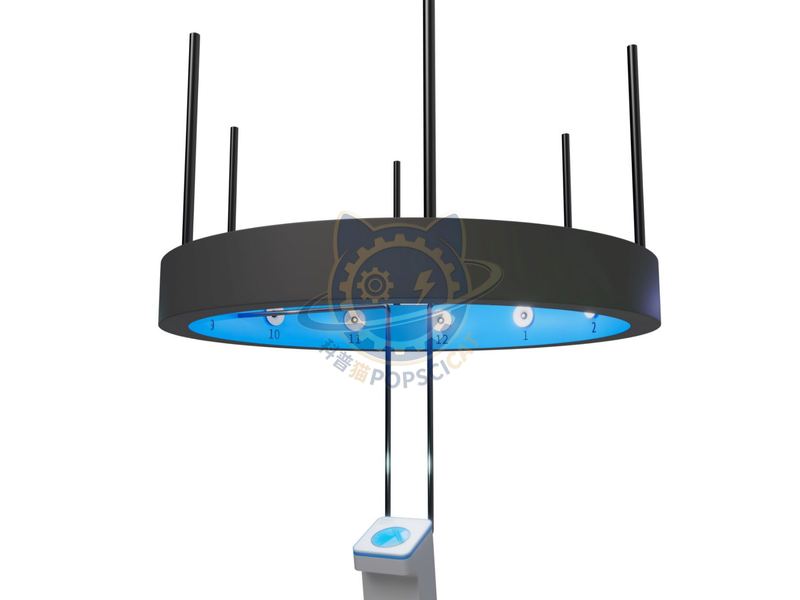
Through interactive listening and positioning, understand the scientific principles of binaural effects. The exhibit consists of 12 loudspeakers and a control panel. Press the start button, and a random speaker will emit sound. Use both ears to determine the location of the sound, click the corresponding button, and select the correct one to continue to the next level. The reason why we are able to distinguish the position of the sound source is because the distance between the sound source and the two ears is different, so the strength and time of the sound received by both ears are different. The brain determines the direction of the sound source based on this, and this phenomenon is called the binaural effect. Stereo technology was invented based on the binaural effect. Target audience: Adolescents aged 6-15. Display format: Electromechanical interactive device operation instructions (audience experience) 1 When visitors press the "start" button at the exhibit area, a speaker will randomly sound; 2. The visitor determines which horn is sounding and presses the corresponding code on the booth.

02 / How visitors use it

Interaction type: Electromechanical interactive. The unit is designed for unsupervised public use: controls are recessed or shielded, moving parts are enclosed, and the interface is operable by a child of about six with no instruction. Where a screen is used, the language can be switched without changing the hardware, and the content can be replaced on site.

03 / The science behind it

The binaural effect refers to the auditory function produced by the joint processing of information from both ears by the binaural nervous system. The main function of binaural effect is sound source localization, which can also improve the signal detection ability and speech intelligibility of listeners in noisy environments. In the 1930s, American scientists S.S. Stephen and E.B. Newman proposed the duplex theory of sound source localization, which states that the time difference and sound level difference of sound signals between the ears are the main clues for localization. This is the basis for the design of early stereo systems. But it cannot explain the mechanism of single ear localization, nor can it explain how the ears are located on a plane perpendicular to the axis of both ears. In the 1970s, it was discovered that the reflection of the ear above frequencies of 4-8 kHz was important for distinguishing elevation angles, and the reflection of the head and shoulders below 2 kHz also had an impact. Therefore, a transfer function related to the head was proposed to describe the spectrum in sound wave propagation.

04 / Built for a public floor

Every unit leaves the factory after a running test: mechanisms cycled, electronics burned in, edges dressed, fixings torqued and marked. Wear parts — bearings, sliders, lamps, belts, touch panels — are modular and listed on the spare-part sheet, so a venue technician can replace them without returning the exhibit. Crating is plywood with foam blocking; the loading plan and packing list travel with the shipment.

Same category

More in Basic Science

Other models from the Basic Science line, all held to the same specification and the same control package.

Start a project

Send us your exhibit list.
We will come back with a price.

Attach a theme outline, a floor plan, or nothing at all — a photo of the space is enough to start. Quotations are issued against a real exhibit list, not per-square-metre guesses.

WeChat QR code — scan to message us Scan to add us
on WeChat